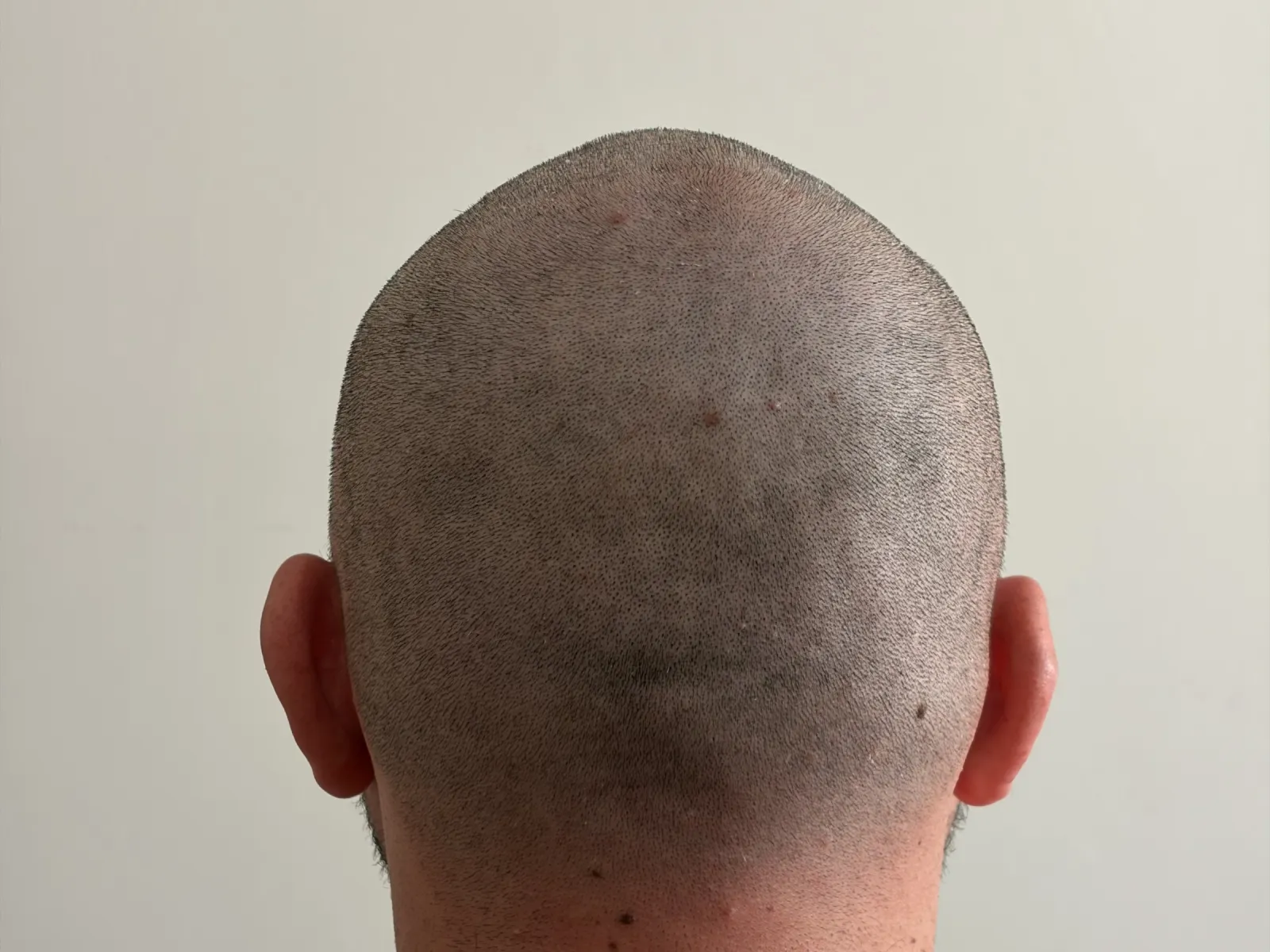
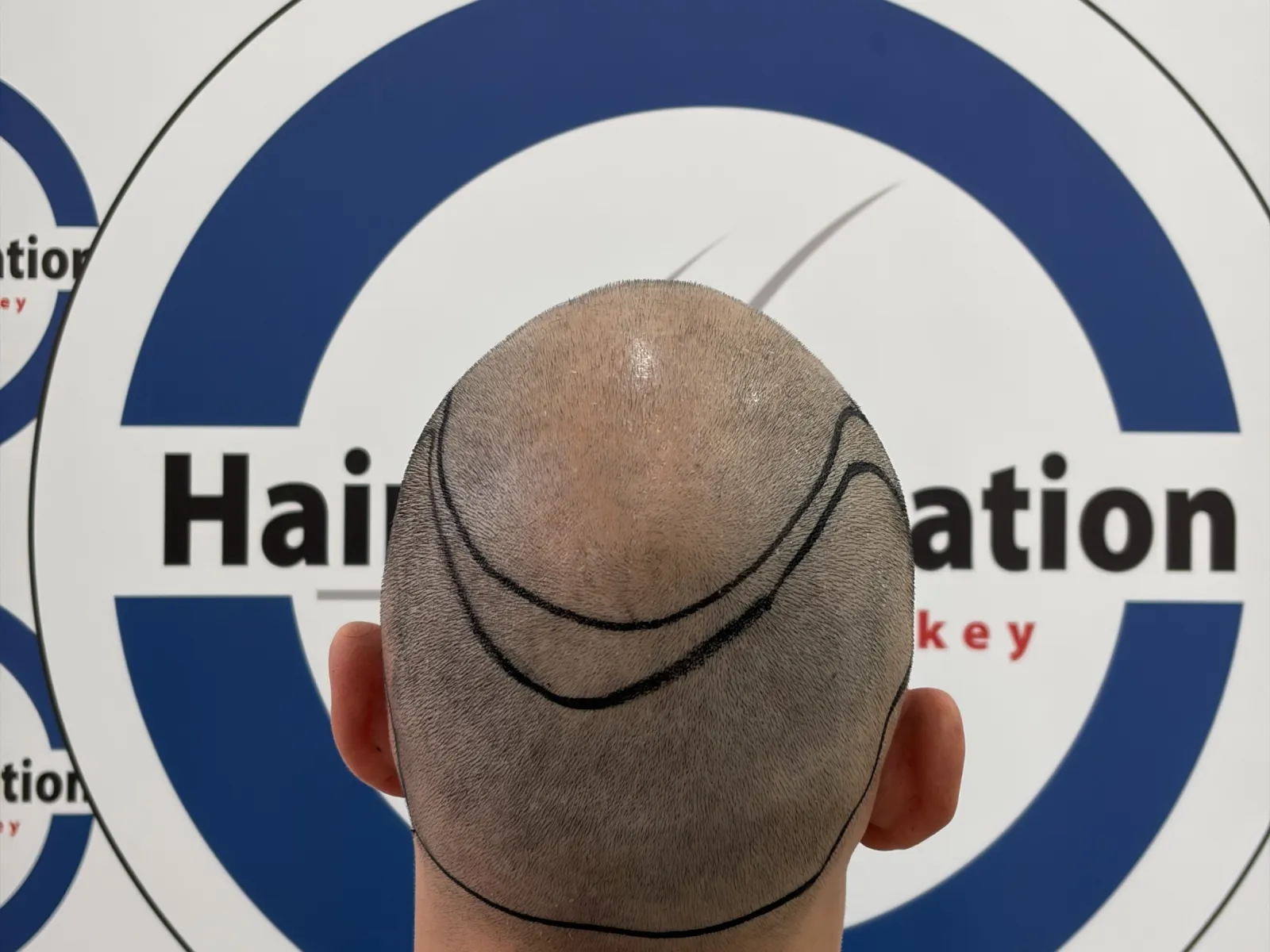
DHI (Direct Hair Implantation) is a hair transplant method in which hair follicles harvested one by one from the back of the head are implanted with special pens called implanters. Because opening the channel and implanting happen in a single motion, the angle and density can be adjusted precisely; in suitable candidates it can also be performed without shaving. New hair starts to grow from the 3rd month, and the final result is seen in months 8–12.
Key points
- In DHI, hair follicles are harvested with the FUE method; the difference is the use of an implanter pen during implantation.
- Because channel opening and implantation happen at the same time, follicles spend less time outside the body.
- In suitable candidates, the recipient area can be treated without shaving.
- The procedure is performed under local anesthesia and usually takes 6–8 hours.
- New hair grows from the 3rd month; the final result is seen in months 8–12.
What is DHI hair transplant?
DHI hair transplant takes its name from the abbreviation of Direct Hair Implantation. In this method, hair follicles are harvested one by one from the back and sides of the head (the donor area), which are genetically resistant to shedding. They are then implanted into the bald or thinning area with special pens called implanters, which have a very fine needle tip.
What sets DHI apart from other techniques is that no separate channels are opened in the recipient area: the implanter pen opens the channel and places the follicle in a single motion. This allows the angle, direction and depth of every single follicle to be controlled individually.
What is the difference between DHI and FUE?
In both methods, hair follicles are harvested in the same way, one by one. The difference lies in the implantation stage:
| DHI | Sapphire FUE / FUE | |
|---|---|---|
| Channel opening | The implanter pen opens the channel and implants the follicle at the same time | Channels are first opened with sapphire or steel blades, then the follicles are implanted |
| Shaving | In suitable candidates, the recipient area can be left unshaven | The recipient area is usually shaved |
| Best suited for | Hairline design, densification, implanting between existing hair | Large bald areas, a high graft count in a single session |
Which method suits you better is decided by assessing the size of the thinning area, the density of the donor area and your hair type. In some patients, both methods are combined (hybrid).
Who is DHI hair transplant suitable for?
- People with a receding hairline or thinning at the crown who have a sufficient donor area
- Those who want to add density to thinning areas while preserving their existing hair
- Suitable candidates who do not want to cut their hair completely short (unshaven DHI)
- Those considering a transplant to the eyebrows, beard or a scar
For young patients whose hair loss is still actively progressing, or for those with a weak donor area, planning is done with extra care; in some cases supportive treatments may be recommended first.
How is DHI hair transplant performed? The procedure day step by step
- Analysis and planning: The hair and scalp are examined, the front hairline is drawn according to your facial proportions, and the number of grafts needed is determined.
- Local anesthesia: The donor and recipient areas are numbed with local anesthesia; no pain is felt during the procedure.
- Harvesting the follicles: Hair follicles are harvested one by one from the donor area with fine-tipped instruments and kept in a suitable solution.
- Implantation: The harvested hair follicles are carefully implanted one by one. The angle and direction of each follicle are adjusted to match your natural hair flow.
- Bandage and aftercare briefing: The donor area is bandaged, and the care for the first days, your medication and the first wash day are explained.
Depending on the number of grafts, the procedure usually takes 6–8 hours. Rest and meal breaks are given during the day.
What to expect after the procedure
- First 10–14 days: Small scabs form in the recipient area; they fall off on their own with regular washing.
- Weeks 2–8: Some of the transplanted hairs shed (shock loss). This is normal; the follicles stay in place.
- Months 3–4: New hair starts to grow in as fine strands.
- Month 6: A noticeable change is visible and the hair starts to thicken.
- Months 8–12: The final result emerges.
What are the advantages and limitations of DHI hair transplant?
DHI stands out for its precise control of the implantation angle, the ability to implant between existing hair and the option of an unshaven procedure in suitable candidates. On the other hand, because each pen requires separate preparation, the procedure can take longer, and on its own it may not always be the best option for very large bald areas. The right method is determined by the doctor after a personal analysis.
How can you find out which method is right for you?
You can get a free preliminary assessment by sending photos of your hair taken from the front, top and back via WhatsApp, or you can fill in the contact form. You can also book an appointment for a face-to-face hair analysis at our clinic in Bayraklı, Izmir.
Frequently asked questions
Does DHI hair transplant hurt?
The procedure is performed under local anesthesia. You may feel a brief stinging sensation while the anesthetic is applied; after that, no pain is felt during the procedure. Mild tightness and tenderness after the procedure are managed with the painkillers recommended by the doctor.
How many grafts can be transplanted with DHI?
The number of grafts is determined by the density of the donor area and the size of the thinning area. The exact number for you becomes clear only after a hair analysis.
Can DHI hair transplant be done without shaving?
In suitable candidates, the recipient area can be treated without shaving. In the donor area, a small section that stays hidden under longer hair usually needs to be trimmed. Your suitability is assessed in the preliminary consultation.
When are the results of DHI hair transplant visible?
The transplanted hairs shed in the first weeks and start to grow back from the 3rd month. A noticeable change is visible at month 6; the final result emerges within 8–12 months.
Sources
This content is for general information only and does not replace diagnosis or treatment. The right method for you is determined by a physician after examining your hair and scalp.